Castore & the Luxury Sportswear Playbook
Luxury sportswear is proof-led: performance first, polish second. Using Castore as a case study, build clear brand codes, athlete-credible stories and service that carries the premium, and keep quality pace with growth.
.avif)
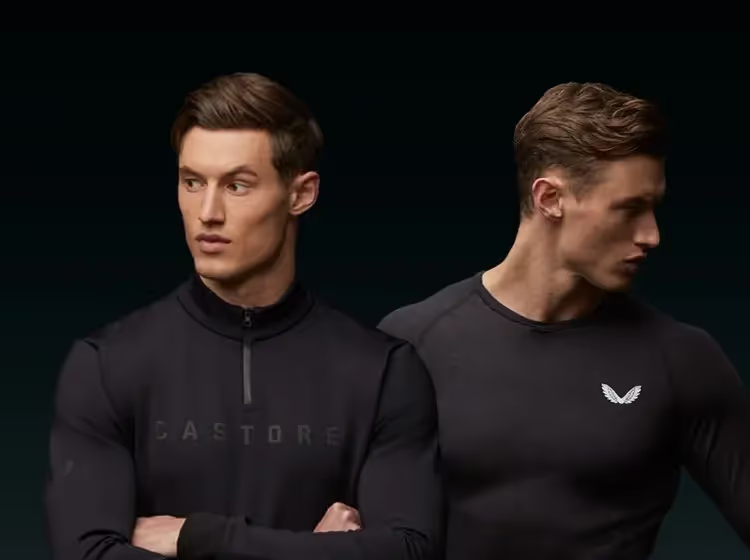
Luxury in sportswear is earned through visible quality rather than loud branding: technical materials with an obvious feel, engineering you can see up close, restrained design, athlete-credible storytelling, carefully chosen partnerships and service that matches the price. Castore, the British brand founded by brothers Tom and Phil Beahon, built its name on this premium positioning, and its journey, including criticism of some club kits, shows both the opportunity and the risks.
Performance brands want the pricing power and loyalty of luxury without losing sporting credibility. Castore's rise shows what premium can look like in technical apparel: materials, engineering and restraint over loud logos.
The question: how do sportswear brands build luxury equity without becoming fashion-first or discount-led?
The answer: codify premium through materials and fit, athlete-credible storytelling, selective partnerships and a service-led retail experience, then measure loyalty, not just last-click sales.

What makes sportswear luxury now
Luxury in sportswear doesn't shout; it shows. It starts with material truth: technical fabrics with an obvious feel that last through training cycles. It's reinforced by engineering you can see: pattern cutting that moves cleanly, thermoregulation where it matters, bonded seams and quality hardware. It's held together by restraint: controlled typography, a disciplined palette and branding that supports the garment. And the customer experience must match, from helpful size guidance to quick exchanges and a care and repair philosophy that treats kit as equipment.

Brand codes you can see and feel
- A fabric point of view: one clear sentence explaining why your core materials exist and when to wear them.
- Cut and drape in motion: show garments moving, not just flat lays, so the athletic purpose is clear across training, travel and recovery.
- Finish and hardware: zips, bonding and stitch density justify price without a word of copy.
- Considered colour: a neutral core that anchors seasonal stories, not a new personality every drop.
If your product pages and content don't reveal these codes within seconds, they aren't codes yet.

Creative: athlete-credible storytelling
Communication should feel native to sport. Swap model poses for real sessions: mobility work, tempo runs and interval sets, so viewers immediately understand the use. Show the layering system working from airport to gym to recovery. Balance editorial polish with lo-fi credibility, such as a close-up of ventilation doing its job or a quick "why this panel is here" explainer. Let athletes and credible creators narrate calmly, with minimal overlays and clear subtitles.

Partnerships without dilution
Partnerships should make your design language clearer, not noisier. Castore's long-running partnership with Andy Murray, including the AMC (Andy Murray x Castore) range, shows how an athlete who genuinely uses the product reinforces credibility. Choose clubs and teams whose colours, culture and audience fit your world, so kits and capsules don't force design choices that break your system. Fewer, story-led capsules build more equity than constant collaborations. Commercially, set quality, availability and pricing standards in contracts so partners don't undercut the premium you're building.

The risk: scale tests premium positioning. Some of Castore's football club kits drew criticism from fans over quality and fit. For any premium brand, quality control and supply-chain consistency have to keep pace with growth, because product problems undermine the promise faster than any campaign can build it.
Retail and service that carry the premium
If the product is the "what", service is "why it's worth it". Help customers buy the right size with real-body try-ons and simple comparison charts, and offer appointments in key stores. Treat fulfilment as part of the brand: purposeful packaging, tracked shipping, fast exchanges and support that responds like a concierge. Publish care guides and stand behind repairs; longevity is a luxury signal. Keep wholesale experiences consistent with your own channels.

Social media's role
Castore has used Instagram and other social channels to showcase products, athletes and partnerships, building a community around performance and premium design. The principle for any premium sportswear brand: use social to show the product working in real training and real lives, and listen to feedback to inform future design.
Measurement that respects loyalty
Measure what durable premium looks like: repeat purchase rate, the mix of core versus capsule items, return rate by fabric, in-store appointment uptake and service scores. Pair these with blended marketing efficiency and acquisition cost by channel, so you can scale without relying on last-click spikes. If loyalty improves while discounting stays minimal, the system is working.
Pros and cons of a luxury-led sportswear strategy
- Pros: pricing power anchored in materials, engineering and service rather than hype; a stronger community among serious users; and more efficient media when stories are credible and repeatable.
- Cons: slower than trend-driven drops; a higher bar for quality, service and supply chain; and partnerships that need tight creative and pricing control.
Frequently asked questions
Is luxury sportswear just a price point?
No. It's visible craft, materials, engineering and restraint, supported by service that earns the price.
Who founded Castore?
Castore was founded by British brothers Tom and Phil Beahon.
Should premium sportswear brands discount?
Avoid it where possible. Use added value such as care, repairs and bundles, and protect pricing across your own channels and wholesale.
What creative works best for premium sportswear?
Athlete-credible training sessions, travel and recovery context, and close-up detail shots, with calm narration and minimal overlays.
How should premium sportswear brands measure success?
Repeat purchase rate, core versus capsule mix, returns by fabric, service scores, and blended efficiency and acquisition cost.
Further reading