Meta Ads for Luxury Hotels in London: A Practical Playbook
Luxury hotels often underperform on Meta because they approach the platform as a direct response channel rather than a brand-building one. This article explores how London luxury hotels can use Meta advertising effectively by combining high-value audience targeting, premium creative, and full-funnel campaign structures that reflect the longer booking journey of affluent travellers. From leveraging first-party guest data to creating desire-led content and measuring success beyond ROAS, it outlines a more sophisticated approach to driving direct bookings while protecting brand equity.
Meta advertising has a reputation problem in the luxury hospitality space. Too many hotels treat it like a direct response channel, chasing cheap clicks and volume metrics that have no place in a five-star conversation. The result? Creative that looks like a budget travel deal, targeting so broad it reaches people who'd never spend £500 a night, and ROAS figures that flatter the spreadsheet while quietly eroding the brand.
We work with premium and luxury brands on paid social, and the London hotel market is one of the most competitive environments we operate in. Mayfair, Knightsbridge, the City — you're not just competing with other hotels, you're competing with the entire experiential economy for a share of a very discerning wallet.
Done properly, Meta ads are one of the most powerful tools a luxury London hotel has. Here's how to actually run them well.
Get Your Targeting Right Before You Touch Creative
Most campaigns fail at the targeting stage, not the creative stage. Luxury hotel marketing managers often inherit campaigns built on interest-based audiences that are far too wide: "travel", "luxury goods", "fine dining". These audiences include everyone from aspirational scrollers to travel bloggers who'll never convert. You're paying to reach them anyway.
The audiences that actually perform for London luxury hotels are built differently.
First-Party Data First
Your CRM is your most valuable targeting asset. Upload your past guest list as a Custom Audience and use it as the foundation for everything else. These are people who've already paid to stay with you. A Lookalike Audience built from your top 5-10% of guests (filtered by spend, not just frequency) will outperform any interest stack you can build from scratch.
If your CRM data is thin, prioritise building it. Run a lead generation campaign offering a members-only rate or early access to a seasonal package. The list you build is worth more long-term than any single booking campaign.
Behavioural and Contextual Signals
Beyond first-party data, focus on behavioural signals over interest categories:
- Website visitors who viewed your rooms or dining pages but didn't book (retargeting these with a specific offer converts well)
- Engaged video viewers who watched 50%+ of your property or experience content
- Instagram profile engagers from the last 60-90 days
- Flight and travel intent audiences via Meta's detailed targeting, combined with household income brackets where available
One targeting combination that consistently works for London luxury properties: Lookalike (1-3%) from top guests, layered with a minimum household income threshold and travel intent signals. Keep the audience size between 500k and 2 million for London and the South East. Tighter than that and frequency becomes a problem; broader and you lose precision.
Creative That Earns Attention Without Discounting the Brand
This is where most luxury hotel Meta campaigns fall apart. The targeting is reasonable, the budget is adequate, but the creative is doing the wrong job.
Luxury creative on Meta has one rule above all others: it should make someone feel something before it asks them to do something. The scroll stop comes from desire, not from a promotional flash or a price callout.
What Actually Works
Short-form video (6-15 seconds) is the format we return to most often for London luxury properties. Not a tour of the hotel. Not a montage of amenities. A single, specific moment: the sound of a cocktail being poured at the bar, the view from a corner suite at dusk, a chef plating a dish in close-up. Sensory and cinematic. No voiceover needed.
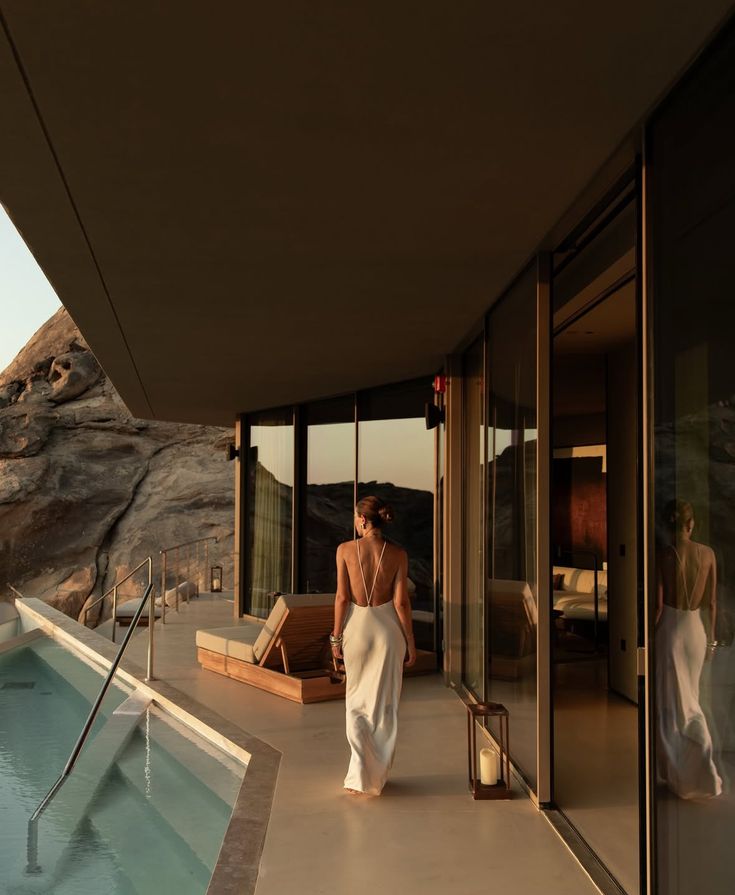
Still imagery still performs well for retargeting, particularly when it's editorial rather than promotional. Think less "book now" banner, more the kind of image you'd find in Condé Nast Traveller. Lifestyle over architecture. People (or the suggestion of people) over empty rooms.
A few creative principles we apply consistently:
- Lead with the experience, not the property. Show what it feels like to be a guest, not what the building looks like from the outside.
- Avoid price anchoring in the creative itself. If you must include an offer, put it in the copy, not overlaid on the visual.
- Use aspect ratios intentionally. 9:16 for Reels and Stories, 1:1 for Feed. Don't crop a landscape shot into a portrait format and expect it to perform.
- Keep text on screen to a minimum. If you need more than five words to communicate the idea, the idea probably isn't strong enough yet.
Copy That Converts Without Feeling Pushy
Luxury ad copy should read like it was written by someone who understands the guest, not by someone trying to fill a character limit. Short primary text works best: one to two lines that create intrigue or speak directly to a specific desire.
"Two nights. No agenda. The rest is ours."
"London's most requested suite. Rarely available."
"Breakfast in bed has never looked quite like this."
The CTA matters less than most people think at the top of funnel. "Learn More" outperforms "Book Now" for cold audiences because it creates less friction and signals that you're not desperate for the transaction. Save "Book Now" and "Check Availability" for warm retargeting audiences who already know you.
Campaign Structure for the Full Booking Journey
A common mistake is running a single campaign and hoping it covers everything. It won't. The luxury booking journey is longer and more considered than most categories, and your campaign structure needs to reflect that.
We use a three-stage funnel for London luxury hotel clients:
- Stage: Awareness — Objective: Video views / Reach — Audience: Cold Lookalikes, interest + income layering — Creative: Cinematic short-form video
- Stage: Consideration — Objective: Traffic / Engagement — Audience: Warm video viewers, profile engagers — Creative: Editorial stills, experience-led copy
- Stage: Conversion — Objective: Conversions / Catalogue — Audience: Website visitors, room page viewers — Creative: Offer-led, specific CTA, urgency where genuine
Keep stages in separate campaigns, not ad sets within one campaign. This gives you cleaner data, independent budget control, and prevents Meta's algorithm from collapsing the funnel by over-indexing on whoever is cheapest to reach.
Budget Allocation
For a property with a meaningful direct booking target, we typically recommend:
- 40-50% of budget at awareness (this is what fills the funnel)
- 25-30% at consideration
- 25-30% at conversion/retargeting
The temptation is to put most of the budget into conversion campaigns because the ROAS looks better on paper. Resist it. A conversion campaign with a depleted retargeting pool is just spending money to reach people who were never going to book anyway.
Seasonal and Event-Driven Campaigns
London has a clear luxury demand calendar. Wimbledon, the Chelsea Flower Show, Art Basel season, Christmas and New Year, Fashion Week. These are moments when high-net-worth visitors are actively planning London trips, and your campaigns should be live and optimised at least four to six weeks before each peak.
Don't wait until the week before to activate. Meta's algorithm needs time to learn, and the best placements are won by campaigns that have already built momentum.
Measuring What Actually Matters
ROAS is not the right primary metric for luxury hotel Meta campaigns, at least not in isolation. A guest who books a suite for three nights and spends on dining, spa and room service has a total value that no single Meta conversion event will capture. Optimising purely for ROAS trains the algorithm to find cheap conversions, which in this market often means lower-value bookings.
The metrics we prioritise instead:
- Revenue per booking tracked via your booking engine, not just Meta's reported conversion value
- Direct booking rate as a proportion of total bookings (Meta should be moving this needle over time)
- Cost per qualified lead for properties running lead gen campaigns
- Blended MER (Marketing Efficiency Ratio) across all paid channels, not just Meta in isolation
For awareness and consideration campaigns, engagement rate, video completion rate, and cost per landing page view are more meaningful than CPM alone.
One reporting note: Meta's attribution window defaults to 7-day click and 1-day view. For luxury hotels with longer consideration cycles, this will under-report conversions. Cross-reference with your booking engine data and use UTM parameters on every ad to track actual bookings driven by the campaign, not just what Meta claims credit for.
The London luxury hotel market rewards patience and precision. The brands that treat Meta as a brand-building channel first and a direct response channel second consistently outperform those chasing short-term ROAS. Get the targeting right, invest in creative that reflects the quality of the experience, and build a funnel that respects the length of the booking decision. The results follow.
If you'd like a second opinion on your current Meta setup, or want to understand how we approach paid social for luxury hospitality, get in touch with the team at 303.