Meta Ad Creatives for Luxury Fashion Brands: How to Lower CPA
Lower CPA for luxury fashion on Meta comes from creative, not targeting. The formats, testing order, copy and production principles that make premium ads convert without diluting the brand.

Introduction
Luxury fashion brands do not usually fix CPA by narrowing audiences. They fix it by making the ad feel more expensive, more relevant and more believable in the first second.
Meta gives premium brands a brutal test: if the creative looks generic, CPA climbs fast. If the creative signals taste, fit and desirability instantly, the ad can do the heavy lifting before the landing page even loads.
This piece breaks down what actually lowers CPA for luxury fashion on Meta, where most brands waste spend, and which creative moves are worth testing first.
Why luxury fashion CPA is a creative problem
In luxury, the barrier is rarely awareness alone. It is perception.
| Common CPA problem | What is usually happening | Why it matters |
|---|---|---|
| High CPM, weak CTR | The creative is not stopping the scroll | Cheap targeting cannot rescue irrelevant creative |
| Good CTR, poor CPA | The ad promise and landing page do not match | Clicks are being bought, not converted |
| Strong retargeting, weak prospecting | Warm intent is doing all the work | The account is not creating new demand |
| Flat CPA across all ads | Testing is too conservative | Meta has no new signal to optimise against |
The mistake most premium brands make is treating Meta like a media buying problem when it is really a creative interpretation problem. Luxury buyers are not looking for louder ads. They are looking for sharper cues: silhouette, material, styling context, restraint and proof that the brand belongs in their world.
That changes the KPI conversation too. For higher-AOV fashion, MER usually tells the truth better than Meta-reported ROAS because it reflects the full business outcome, not just platform attribution.
Creative formats that tend to lower CPA
The best-performing luxury fashion ads usually do one of three things: show the product in context, show it on a real body, or show enough detail to make the item feel worth the price.
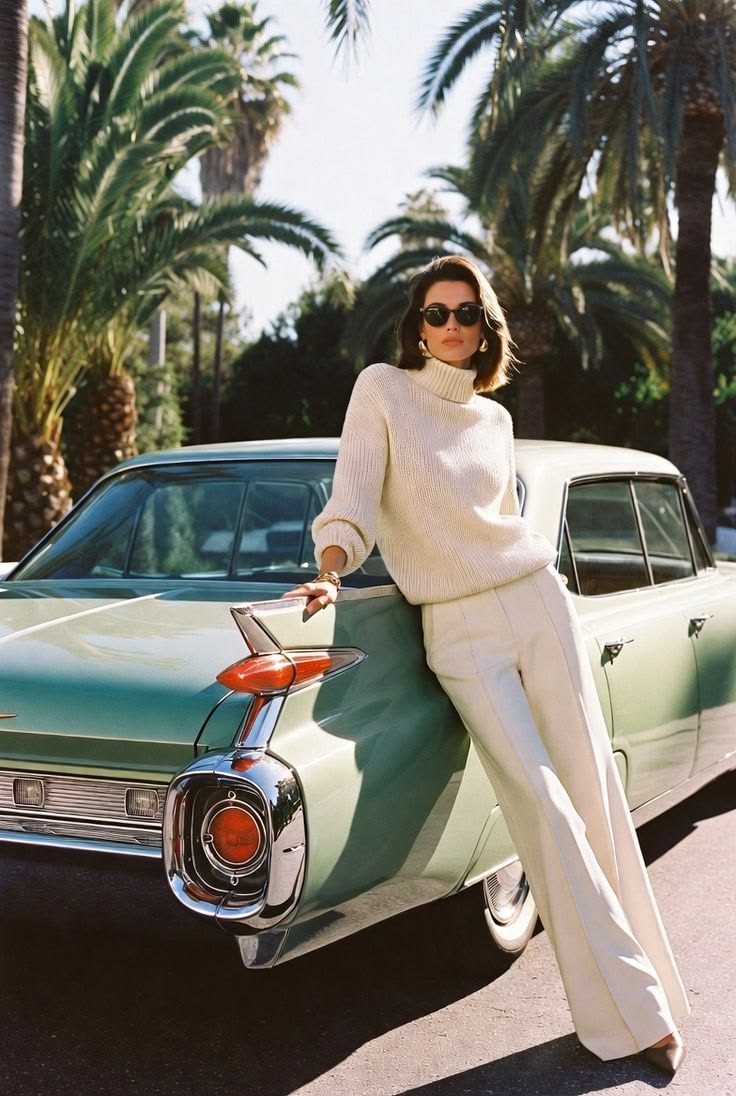
1. On-model lifestyle
This is the safest starting point for cold traffic because it balances aspiration with clarity.
- Shows fit, movement and proportion
- Makes the product feel lived-in rather than staged
- Usually beats static product shots for scroll stopping
2. Editorial but direct
Luxury brands often overinvest in filmic brand work and underinvest in direct response clarity. The fix is not to make the ad ugly. It is to make the product legible.
If the viewer cannot tell what the item is, what it costs emotionally, or why it belongs in their wardrobe, the creative is doing too little.
3. Detail-led close-ups
For premium fabrics, tailoring or craftsmanship, detail shots can support CPA by reducing uncertainty.
- Stitching
- Texture
- Hardware
- Cut and drape
- Movement in natural light
A common pattern is that the highest-fashion creative is not always the highest-converting creative. The most efficient ads are usually the ones that reduce doubt fastest, not the ones that look most like a campaign image.
What to test before changing targeting
Most luxury fashion accounts change audiences too early. That usually hides the real issue.
| Test order | What to change first | What you are trying to learn |
|---|---|---|
| 1 | Hook and first frame | Does the ad stop the right person? |
| 2 | Format | Does video, carousel or stills create better intent? |
| 3 | Message angle | Is the hook about craftsmanship, occasion, exclusivity or fit? |
| 4 | Landing page match | Does the page continue the same story? |
| 5 | Audience refinement | Only after the creative is proven |
A useful benchmark is whether the ad can sustain performance long enough to produce meaningful data. Fashion creative fatigue arrives quickly, so brands need a regular refresh cadence rather than a single evergreen concept. In practice, that means more testing, not more audience layering.
The right question is not "who else can we target?" It is "what version of the product story lowers friction fastest?"
Copy and messaging for luxury Meta ads
Most luxury fashion brands spend heavily on visual production and very little time on the words around the creative. That is a mistake. On Meta, copy and creative work together. Weak copy undercuts strong visuals.
Keep copy restrained, not absent
Luxury buyers respond to brevity. Long, feature-heavy copy reads like a product description and undercuts the premium signal the creative is trying to build. The most effective approach is usually:
- One line that names the occasion or feeling
- A product name or collection reference
- A clean CTA that matches the tone (Shop Now works; Grab Yours does not)
The copy should feel like a caption in a magazine, not a pitch from a market stall.
Avoid discount language entirely
Price promotions and urgency tactics (Limited time, Only 3 left) are almost always counterproductive for luxury fashion on Meta. They attract deal-seekers who will not convert at full price and signal to the algorithm that your audience is price-sensitive, which pulls in lower-quality traffic over time.
If you are running a seasonal sale, the creative itself can signal newness or occasion without leaning on countdown timers or percentage-off callouts.
Match tone to placement
Stories and Reels demand a different register to feed placements. A feed ad can hold a considered, editorial tone. A Reel needs a faster hook, usually in the first one to two seconds, but the brand voice should remain consistent. The mistake is making Reels feel like TikTok content. Luxury buyers on Instagram are not the same audience.
Key principle: the copy should never work harder than the creative. If you need a paragraph to explain why the product is desirable, the creative is not doing its job.
Creative production principles that protect brand equity
Running performance creative at scale creates a tension that every luxury brand eventually hits: the more you test, the more you risk diluting the brand. That tension is manageable, but it requires clear production principles from the start.
Set a visual identity floor
Before testing begins, define what the brand will never do in paid creative. This is not about being precious. It is about making sure that the pursuit of a lower CPA does not produce ads that embarrass the brand or confuse the audience.
A practical visual identity floor includes:
- Approved colour palettes and background treatments
- Font rules for any text overlays
- Minimum production quality standards (lighting, resolution, styling)
- A list of contexts or aesthetics that are off-brand
This gives the creative team clear boundaries to test within, rather than unlimited freedom that gradually erodes the brand's visual language.
Use UGC carefully
User-generated content can work for luxury fashion, but the bar is higher than in other categories. Poorly lit, casually shot UGC reads as low-quality and can actively undermine the price point. When UGC does perform well in this space, it tends to be:
- Shot by creators with an existing aesthetic alignment to the brand
- Styled and lit to a standard close to the brand's own production
- Used in retargeting rather than cold prospecting
The test: would this piece of content appear on the brand's own Instagram feed without looking out of place? If not, it probably should not run as a paid ad.
Build a refresh cadence into the production budget
Fashion creative fatigue is faster than most brands plan for. A single campaign concept running for four to six weeks will usually see CPA climb in the final two weeks as frequency builds against the same audience. The fix is not a bigger budget. It is a production model that generates new creative consistently.
A workable approach is to plan three to four creative concepts per campaign period, with two to three variations per concept. That gives the account enough material to rotate before fatigue sets in, without requiring a full shoot for every refresh.
| Creative volume | Typical refresh period | Risk level |
|---|---|---|
| 1-2 concepts | 2-3 weeks before fatigue | High |
| 3-4 concepts | 4-6 weeks before fatigue | Medium |
| 5+ concepts with variations | 6-8 weeks before fatigue | Low |
The brands that consistently hold CPA down are not the ones with the biggest single campaign. They are the ones with the most disciplined creative pipeline.
Conclusion
For luxury fashion, lower CPA usually comes from better creative signals, not broader media tricks. The brands that win are the ones that make the product feel desirable, legible and worth attention before the click.
If you want cheaper conversions, start with the frame, the format and the story. Audience changes matter, but only after the creative has earned the right to scale.