How Much Should a Luxury Fashion Brand Spend on Meta Ads?
A practical guide to Meta Ads budgets for luxury fashion brands: 2026 benchmarks, why MER beats Meta-reported ROAS, budget splits by spend tier, creative testing and the signals that say when to scale.

The question luxury fashion brands ask most often when they first approach paid social is a simple one: how much should we spend? It is, unfortunately, the wrong question. The right question is: how should we allocate, test and scale in a way that reflects how luxury customers actually buy?
The answer looks different at £8,000 a month than it does at £80,000. And it looks fundamentally different for a luxury label than it does for a fast fashion brand, even if the two are spending identical amounts. Generic paid media guides rarely make that distinction. This one does.
What you'll find in this guide:
- 2026 benchmark data for fashion and luxury CPM, CPA and ROAS on Meta
- Why Meta-reported ROAS is the wrong primary metric for luxury brands
- Budget allocation frameworks by monthly spend tier
- A structured creative testing approach that works at any budget
- The scaling signals that tell you when to push and when to hold
Why Luxury Fashion Is a Different Game on Meta
Most Meta Ads guides are written with DTC basics brands in mind. Low price point, high purchase frequency, impulse-driven decision making. Luxury fashion operates on entirely different economics, and running the same playbook will produce consistently disappointing results.
The core difference is the purchase cycle. A customer buying a £400 coat is not making an impulse decision. They are building trust over weeks, sometimes months, evaluating quality signals, brand positioning and social proof before they ever click "buy." That longer consideration path changes everything: how you structure campaigns, what creative you run, and critically, how you measure performance.
The Metrics Problem
Meta-reported ROAS is a manipulatable metric for luxury brands. Attribution windows, view-through conversions and the platform's natural tendency to claim credit for organic purchases inflate the number. A luxury brand with a £350 average order value (AOV) might report a 4x ROAS in Ads Manager while the actual incremental return on ad spend is closer to 1.8x.
The more reliable metric is Marketing Efficiency Ratio (MER): total revenue divided by total ad spend. It is simple, manipulation-resistant and reflects the reality of your business. For high-end and designer fashion brands with AOVs above £250, a healthy MER target typically sits between 15x and 35x, according to data from fashion-specialist agencies working with 40+ clients. That figure looks impressive, but it reflects high margins and lower volume. It cannot be compared to a streetwear brand's MER any more than their customer acquisition costs can be compared.
What Luxury Buyers Actually Respond To
The mechanics of Meta Ads matter less for luxury brands than the story being told. As the platform's own research confirms, ad sets need roughly 50 optimisation events to exit the learning phase, meaning the algorithm needs volume to work. But the creative quality determines whether that volume converts at a profitable cost.
Luxury buyers respond to:
- Craftsmanship and provenance narratives (the story of how and where the product is made)
- Founder and brand world storytelling (the identity and values behind the label)
- Social proof from the right tier (celebrity and influencer signals that place the brand in a specific status category)
- Emotional outcome, not product specification (how wearing or owning the piece makes the customer feel)
Jacquemus launches a leather bag with Eva Herzigova and no product specification at all: identity, status and emotional outcome, carried by casting. Over 2 million plays.
This is why broad targeting consistently outperforms heavily layered interest audiences for luxury fashion when paired with strong creative. The creative does the audience selection work. The algorithm finds the buyers.
2026 Benchmark Data: What Luxury Fashion Brands Are Actually Paying
Before setting a budget, you need a realistic picture of what Meta inventory actually costs in the fashion and luxury space. The numbers below are drawn from 2026 data across multiple industry sources and reflect the current competitive landscape.
UK vs US Costs: A Significant Gap
One figure that surprises many UK brands: CPMs in the UK are substantially lower than in the US. 2026 benchmark data shows UK fashion CPMs averaging around £8.50 to £10.85, compared to US averages of £16 to £20. That cost advantage matters. A luxury brand with a £300 AOV and 50% margins can remain profitable at a lower ROAS threshold than a brand operating in a more expensive ad market.
Fashion and Luxury Benchmarks at a Glance
The table below combines observed data from a cohort of 14 fashion DTC brands tracked over 12 months to October 2026, alongside modelled planning baselines for premium and luxury sub-categories.
| Metric | Fashion (median, 12 months) | Premium / outerwear | Luxury / high AOV |
|---|---|---|---|
| CPM | £17–£25 | £10–£13 | Higher (competitive audiences) |
| CPC | £1.00–£1.30 | £1.30–£1.63 | £1.50+ |
| CTR | 1.67% | Under 1% | Under 1% |
| CPA | £50–£75 | £45–£58 | £60–£100+ |
| Meta ROAS (attributed) | 2.21x | 2.9x (modelled) | 1.8x–3.0x |
| Target MER | 6–15x | 10–20x | 15–35x |
Sources: MHI Meta Benchmarks DTC October 2026 (14 fashion brands, 12-month cohort); AdRiseLab modelled 2026 baselines; Silverback Marketing 2026 Paid Media Benchmark Report. Figures converted to GBP at approximate rates.
What the Data Actually Tells You
A few things stand out from these numbers that most guides skip over.
First, premium and luxury categories have lower CTRs, and that is expected. A sub-1% CTR on a luxury ad is not a failure. The audience is smaller, more considered and less likely to click impulsively. Optimising for CTR in the luxury space is the wrong instinct; it pushes creative toward mass-appeal hooks that erode brand positioning.
Second, Meta-attributed ROAS for luxury brands (1.8x to 3.0x) looks weak against fast fashion benchmarks. That gap is almost entirely explained by price point, purchase cycle length and attribution model. A luxury brand generating £300 per order at a 2.5x Meta ROAS is in a very different financial position to a basics brand generating £40 per order at the same number.
Third, CPMs increase by roughly 45% in November due to Black Friday and Cyber Monday auction pressure. Luxury brands that do not participate in promotional events should consider pulling back spend in that window or shifting budget toward brand awareness placements, where the intent-to-buy competition is lower.
Budget Allocation by Monthly Spend Tier
The single most common mistake luxury fashion brands make on Meta is fragmenting a modest budget across too many campaigns. More campaigns at lower spend means less data per campaign, slower algorithm learning and less reliable creative signals. The principle is consolidation first, expansion second.
The framework below is structured around monthly spend tiers. Each tier has a different primary objective, account architecture and allocation logic.
Tier 1: £8,000–£20,000 per month
At this level, the goal is validation, not growth. The account should prove that Meta can acquire customers profitably for your specific brand before any scaling decisions are made.
Account structure: One consolidated sales campaign. Optional limited remarketing only if conversion volume justifies it.
Budget split:
- 80% core acquisition
- 20% creative testing and remarketing
What to focus on: Identifying the creative narratives that attract qualified customers. Craftsmanship storytelling, editorial imagery and founder-led content are the angles most likely to resonate at this stage. Run two to three creatives maximum. Let the data tell you what works before expanding the creative pool.
Key principle: At this spend level, too many campaigns fragment the learning. One well-funded campaign will always outperform three underfunded ones.
Tier 2: £20,000–£60,000 per month
The account now has enough conversion volume to support more structured testing. The priority shifts from proving the channel works to improving the quality of customer acquisition.
Account structure: Core sales campaign, dedicated creative testing campaign, selective remarketing.
Budget split:
- 70% core acquisition
- 20% creative testing
- 10% remarketing
What to focus on: Systematic creative testing across different narrative angles. At this tier, a dedicated testing sandbox (using ABO campaigns) allows new concepts to be evaluated without disrupting the core campaign's learning. An illustrative allocation might be £35,000 on core acquisition, £14,000 on testing and £7,000 on remarketing.
Tier 3: £60,000–£120,000 per month
Scaling campaigns become viable at this level, alongside structured creative testing and category-level campaigns for specific product lines or collections.
Budget split:
- 65% core acquisition
- 25% testing and category expansion
- 10% remarketing
What to focus on: Expanding demand efficiently. Rather than simply increasing spend on a single successful campaign, the brand should test complementary product categories, new collections or additional geographic markets. Budget increases should follow actual customer demand and inventory availability, not arbitrary percentage lifts.
Tier 4: £120,000+ per month
At significant scale, the question is no longer "is Meta working?" but "is the next pound of spend creating profitable incremental revenue?" A brand can maintain an attractive reported ROAS while new-customer CAC quietly increases and repeat customers account for a growing share of attributed conversions.
Budget split:
- 60% core acquisition
- 25% expansion and testing
- 15% remarketing and retention
What to focus on: Protecting marginal profitability. Tracking new-customer acquisition cost separately from blended CPA. At this scale, Meta alone is rarely sufficient. Channel diversification, including Google Shopping and international strategy, becomes critical.
Budget Tiers at a Glance
| Monthly budget | Primary objective | Core split |
|---|---|---|
| £8k–£20k | Validate the channel, find winning creative | 80/20 (acquisition / testing and remarketing) |
| £20k–£60k | Improve acquisition quality, systematic testing | 70/20/10 (acquisition / testing / remarketing) |
| £60k–£120k | Scale efficiently, expand categories | 65/25/10 (acquisition / testing and expansion / remarketing) |
| £120k+ | Protect margin, diversify channels | 60/25/15 (acquisition / expansion and testing / remarketing and retention) |
How to Structure Creative Testing for Luxury Fashion
Creative testing is where most luxury fashion brands leave money on the table. The instinct is to treat it as a visual exercise: try a different model, change the background, swap the copy. That approach generates noise, not signal. The correct order is to test the buying reason first, the format second and the hook third.
The Testing Hierarchy
Most brands do this backwards. They obsess over format (video vs. static, Reels vs. carousel) before they have established which core narrative actually converts their audience. Format is a delivery mechanism. The buying reason is the argument being made.
For a luxury fashion brand, buying reasons might include:
- Craftsmanship and material quality: "The difference is in the weight, the construction, the feel."
- Provenance and heritage: The story of where the brand comes from and why that matters.
- Identity and belonging: How wearing the piece signals membership of a particular world or community.
- Drop scarcity: "Once this capsule sells out, it is gone."
- Social proof: The piece that everyone keeps asking about.
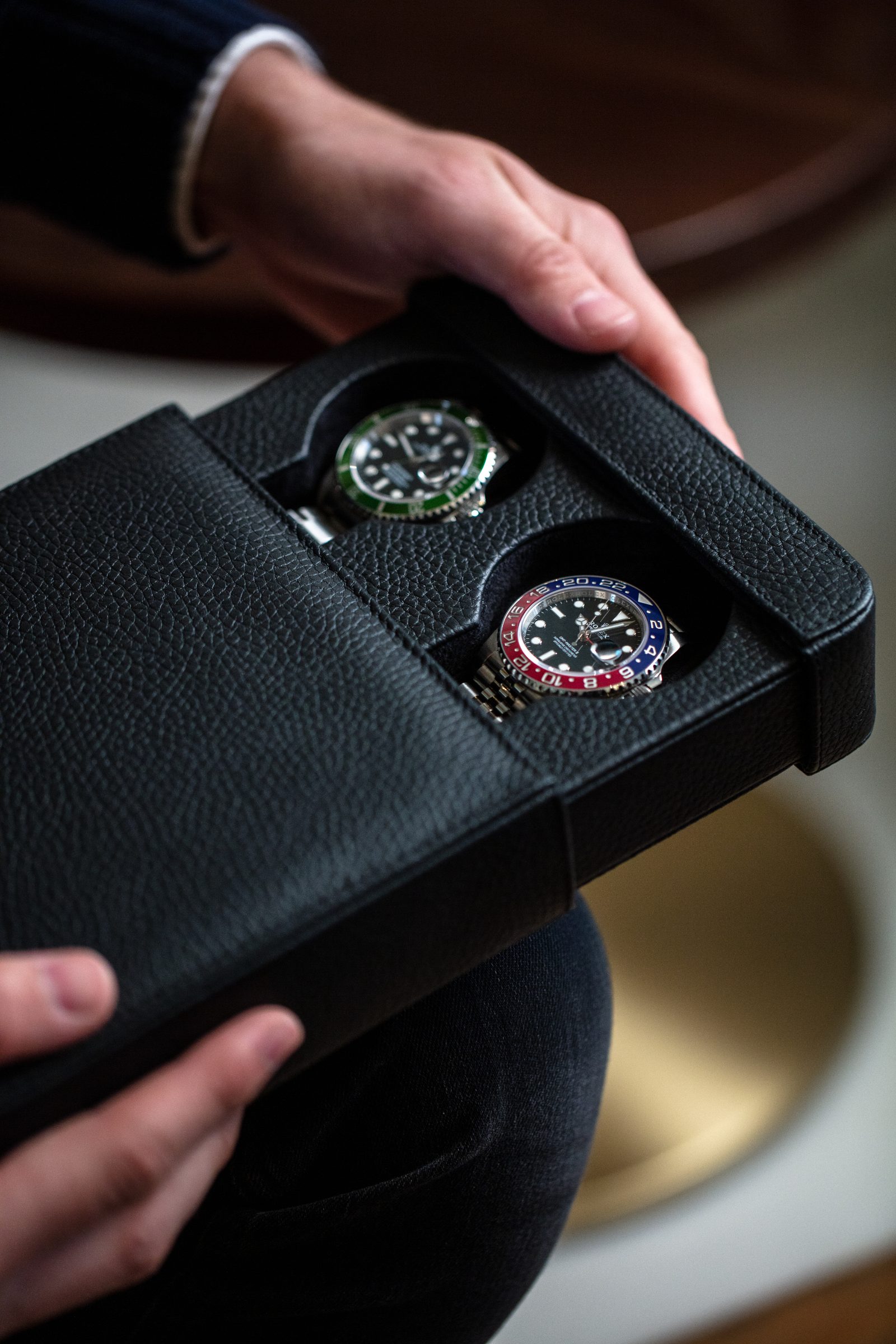
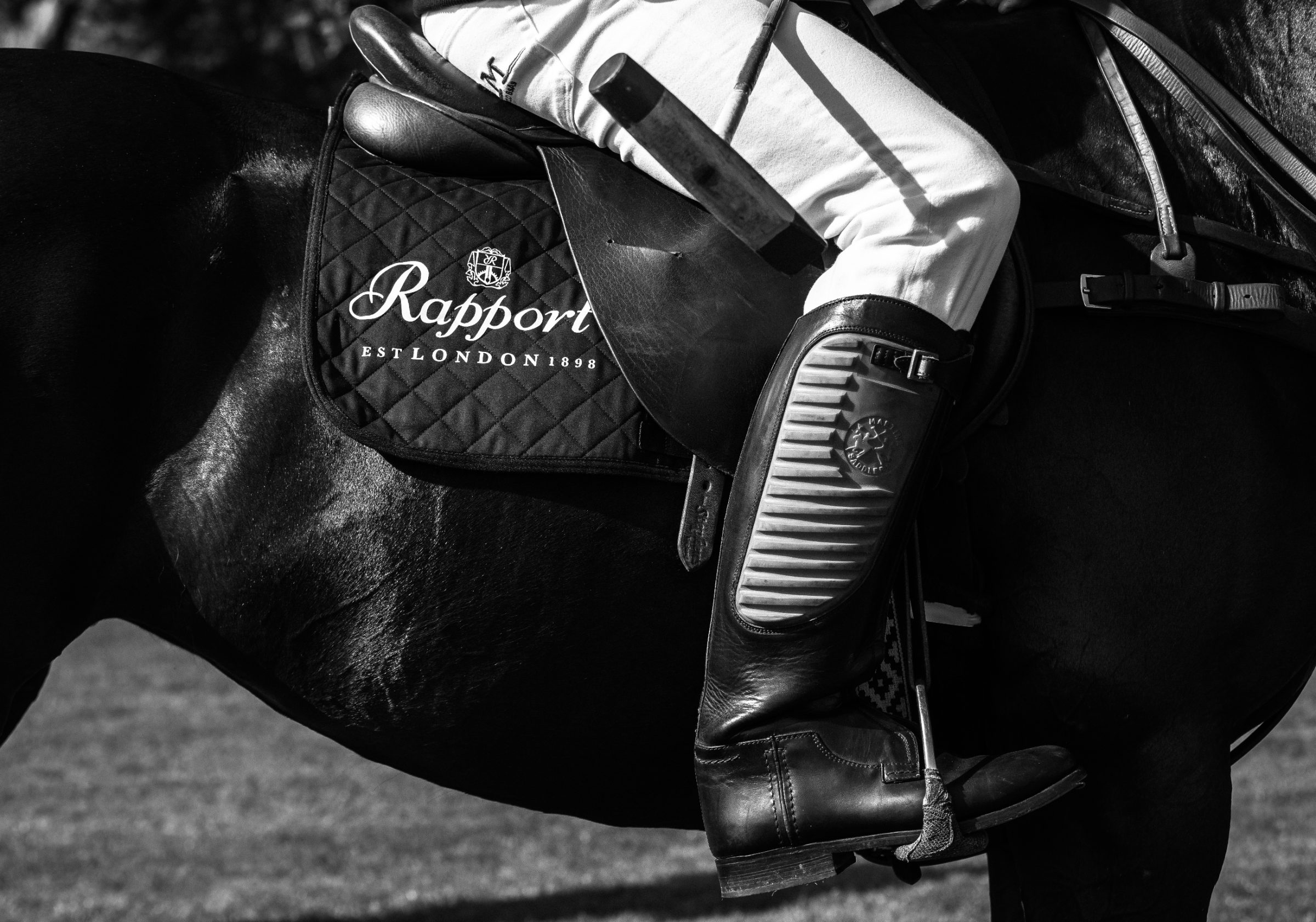

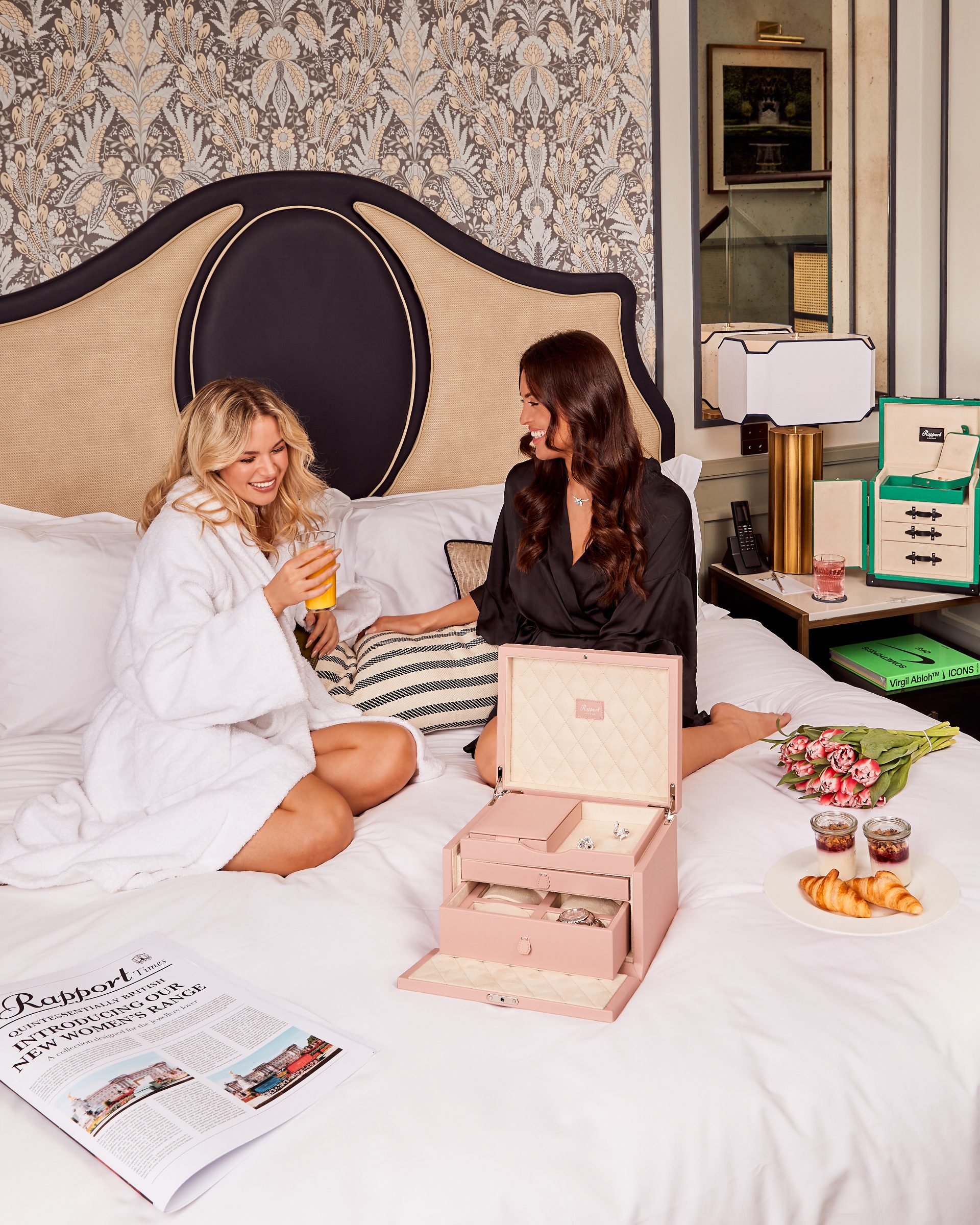
Four buying reasons, four separate hypotheses, from 303 shoots for Rapport London and Burlington Arcade. Test each as its own concept before playing with format or hook.
Each of these is a distinct hypothesis. Test them separately before layering in format and hook variations.
The Testing Sandbox Structure
A clean testing setup separates new creative experiments from proven scaling campaigns. Mixing the two means winning creatives subsidise losing ones, and the data becomes impossible to read cleanly.
Recommended structure:
| Campaign | Purpose | Budget type | What goes inside |
|---|---|---|---|
| Creative testing sandbox | Test new concepts | ABO | One ad set per concept, 2–4 ads per set |
| Scaling campaign | Scale proven winners | CBO or ASC | Only ads that passed the test threshold |
| Remarketing layer | Convert warm audiences | CBO or ASC | Social proof, editorial and objection-handling creative |
How Much Budget Per Creative?
The minimum viable test budget is roughly 2x your target CPA per creative. If your target CPA is £80, each creative needs approximately £160 in spend before a hard decision is made. If a creative spends 2x target CPA with zero purchases, kill it immediately.
The number of creatives you should be testing each month scales with spend:
| Monthly Meta spend | New creatives per month | Testing budget | Budget per creative |
|---|---|---|---|
| £5k–£15k | 8–12 | 20–25% | £50–£100 |
| £15k–£50k | 15–25 | 15–20% | £100–£250 |
| £50k–£150k | 25–40 | 10–15% | £250–£500 |
| £150k+ | 40–60+ | 10% | £500+ |
Reading the Results
Give each test 48 to 72 hours before making a decision, unless it is clearly broken. The signals to look for:
| Signal | What it means | Action |
|---|---|---|
| CPA below target, 3+ purchases, stable spend | A clear winner | Move it to the scaling campaign |
| High CTR, low conversion rate | The hook worked; the landing page or offer failed | Iterate off-platform |
| Low CTR, strong conversion rate | The hook is weak but the audience is qualified | Tighten the opening |
| High spend, zero purchases | The concept or offer failed | Kill it |
One critical rule for luxury brands: do not launch new creatives daily. Meta's own learning phase documentation confirms that ad sets need roughly 50 optimisation events to stabilise. Daily launches prevent the algorithm from building reliable signal on any single ad. A weekly or bi-weekly launch cadence gives each batch seven days of stable delivery, which is the minimum needed to evaluate it fairly.
When to Scale and When to Hold
Scaling is not simply increasing budget. Increasing spend on a campaign that has not demonstrated consistent profitability is not scaling; it is amplifying waste. The decision to scale should be driven by specific signals, not optimism or pressure to show growth.
The Signals That Justify Scaling
Before increasing budget on any campaign, the following conditions should be met:
- Consistent CPA below target for at least 7 days. A single good day is noise. A week of consistent performance below your target CPA is signal.
- Minimum 3 purchases attributed. Below this threshold, the data is statistically unreliable regardless of what the ROAS number shows.
- New-customer CAC is stable or improving. If blended CPA looks healthy but new-customer acquisition cost is quietly rising, repeat buyers are masking a deteriorating prospecting performance.
- MER is holding. Total revenue divided by total ad spend should not be declining as you increase spend. If MER drops sharply when you push budget, the marginal return on new spend is negative.
How to Scale Without Disrupting Learning
Budget increases on Meta should be gradual. Increasing a campaign budget by more than 20 to 30% in a single change risks pushing the campaign back into the learning phase, which resets optimisation progress and typically produces a period of erratic performance.
The safer approach:
- Increase budgets by no more than 20% every three to five days
- Allow three to five days of stable delivery after each increase before evaluating
- If performance deteriorates after an increase, reduce back to the previous level rather than pausing the campaign entirely
The Advantage+ Shopping Campaign as a Scaling Vehicle
Meta's Advantage+ Shopping Campaigns (ASC) have become the preferred scaling structure for fashion brands that have identified proven creative. ASC allows Meta to optimise delivery across the full funnel, combining prospecting and retargeting in a single campaign, and it performs best when fed a strong pool of proven creative assets.
The recommended approach is to feed ASC exclusively with creatives that have already passed through the testing sandbox. Using unproven creative in ASC means the algorithm wastes spend finding out what does not work, at scale.
The Timeline Reality
Brands need at least three months of consistent data before drawing firm conclusions about Meta performance. Months one to three are the learning phase: audiences are being built, creative is being evaluated and baseline performance is inconsistent. Structural decisions made on month-one data are almost always wrong.
The performance arc typically looks like this:
- Months 1–3: Inconsistent results. Normal. Do not restructure based on weekly swings.
- Months 3–6: Stabilisation. Reliable patterns emerge. Scaling decisions become valid.
- Months 6–12: Optimisation. Aggressive scaling on what works, cutting what does not. MER should improve as budget allocation sharpens.
The brands winning on Meta today are not necessarily spending more. They are developing better creative hypotheses, testing more systematically and building processes that continuously generate new angles.
The Three Mistakes That Drain Luxury Fashion Ad Budgets
Knowing where budgets disappear is as useful as knowing where to invest them. These are the three most common failure modes for luxury fashion brands on Meta, and they are avoidable.
Mistake 1: Testing with Too Little Budget Per Campaign
Running campaigns at £20 to £30 per day means Meta's algorithm cannot gather enough conversion data to optimise. The result is erratic performance that does not represent what the channel can actually deliver. The minimum viable daily budget per active campaign during testing is £50 to £100. Below that, the data is unreliable and decisions made from it will be wrong.
This is particularly damaging for luxury brands because the higher CPA (£60 to £100+) means the algorithm needs more spend to accumulate the 50 optimisation events required to exit the learning phase. Underfunding a campaign is not cautious; it is expensive.
Mistake 2: Optimising for the Wrong Metrics
Luxury fashion brands frequently report success based on Meta-attributed ROAS and CTR, two metrics that can actively mislead decision-making. High CTR in the luxury category often means the creative is appealing to a broad, low-intent audience rather than the qualified buyers the brand actually wants. And as covered earlier, Meta-attributed ROAS overclaims credit in ways that mask declining new-customer acquisition performance.
The metrics that matter for luxury fashion:
- Marketing Efficiency Ratio (total revenue / total ad spend)
- New-customer CAC (cost to acquire a first-time buyer, tracked separately)
- Contribution margin per acquisition (revenue minus cost of goods and ad spend)
- 90-day customer LTV relative to acquisition cost
Mistake 3: Treating Meta as a Standalone Channel
At higher spend tiers, Meta performance is directly influenced by what is happening on other channels. Organic social builds the brand equity that makes paid ads more efficient. Influencer and press coverage creates the ambient awareness that shortens the consideration cycle. Email captures the customers Meta acquires and increases their lifetime value.
A luxury brand that runs Meta in isolation, without a coherent organic strategy and brand-building activity, will consistently find that its Meta ROAS deteriorates over time as it exhausts the warm audience that organic reach was quietly building. The paid channel amplifies what already exists; it cannot substitute for it.
A Practical Starting Point
The question "how much should we spend?" has a more useful answer once it is reframed: spend enough to generate reliable data, allocate based on your current growth stage and scale only when the signals are clear.
For most luxury fashion brands entering or restructuring their Meta presence, that means:
- Minimum £50 to £100 per day per active campaign during the testing phase
- A consolidated account structure with no more than one to two active sales campaigns until conversion volume justifies expansion
- MER as the primary success metric, not Meta-reported ROAS
- Three months of consistent spend before drawing structural conclusions
- Creative testing as a continuous process, not a one-off experiment
The brands that build durable Meta performance are not the ones with the biggest budgets. They are the ones with the clearest hypotheses, the most disciplined testing processes and the patience to let data accumulate before making decisions.
If you are building or refining a paid social strategy for a luxury or premium fashion brand and want a framework tailored to your specific AOV, margins and growth stage, get in touch with the team at 303. We work with premium brands across paid media, creative and organic distribution, and we can help you build an approach that actually reflects how your customers buy.