Is Paid Social Worth It for a Homeware Brand With a Long Sales Cycle?
Paid social often looks broken for homeware brands because considered purchases take weeks while Meta credits sales within days. This guide covers which platform does which job, a three-stage campaign structure, the measurement fixes that reveal delayed sales, and how to judge results over 90 days.

Most homeware brands that give up on paid social don't have a channel problem. They have a logic problem. They run impulse-purchase campaigns on a considered purchase, then declare the channel broken when the dashboard shows a disappointing ROAS.
The real journey looks different. Someone sees your linen cushion on Instagram on a Tuesday and saves it. Three weeks later they come back through Google, read your returns policy, add to cart and leave. A retargeting ad reaches them in week five. They buy in week seven. Under Meta's default 7-day click window, Meta gets no credit for that sale.
The problem usually isn't paid social. It's measuring a multi-week journey through a one-week window.
This guide is for ecommerce and marketing leads at homeware brands who want a structure that matches how their customers actually buy. It covers why the long cycle changes campaign structure, which platform does which job, what creative works at each stage, how to fix measurement, and how to judge whether it's working.
Why the Long Sales Cycle Changes Everything
Homeware isn't fashion or beauty. Someone choosing a sofa, a set of cookware or a statement rug measures rooms, consults a partner, compares alternatives and revisits the idea over several sessions, often across weeks.
Homeware is really two businesses: lower-priced decor that behaves like an impulse buy, and furniture and big-ticket pieces that behave like considered purchases with a multi-week path. Structure paid social for the one you are.
That distinction matters. Running a conversion campaign on cold audiences for a £400 dining table isn't just inefficient. It asks the algorithm to find people who will buy a high-ticket item within days of first seeing your brand, which isn't how those purchases happen.
The two mistakes that kill homeware paid social
| Mistake | Why it hurts |
|---|---|
| Only running conversion campaigns on cold audiences | You ask Meta or Pinterest to find people ready to buy now, from a brand they've never heard of, at a high price. CPA is punishing and the channel gets cut before the funnel has time to work. |
| Judging performance on Meta's default window | 7-day click, 1-day view under-credits any purchase that takes longer than a week. Brands end up cutting campaigns that drive revenue they can't see. |
The fix for both starts with treating paid social for considered homeware as a multi-stage, multi-week investment, not a pure direct-response lever.
Which Platforms to Use, and When
The common mistake is picking one platform and expecting it to do everything. Give each platform a specific job based on where it sits in the consideration cycle.
Meta (Instagram and Facebook): scale, retargeting and warm audiences
Meta is the highest-volume channel for most homeware brands. With targeting increasingly automated, creative now does most of the audience qualification, so the ad itself has to signal who it's for.
Where Meta works hardest for considered homeware:
- Dynamic catalogue retargeting for people who've viewed product pages, using a long audience window (30 to 90 days) rather than a short one
- Customer list signals and lookalikes built from your best existing customers rather than cold interest targeting
- Warm audience nurturing for people who've engaged with your content or visited your site
Pinterest: the underused consideration channel
Pinterest is the most underestimated paid channel for homeware. People use it to plan. Someone searching "Scandi living room" or "modern kitchen ideas" is already in a buying journey: curating options, comparing aesthetics and building a shortlist.
Pinterest says 97% of top searches on the platform are unbranded, so a brand that has never advertised there can still appear in front of people actively searching the category. Its measurement also suits long cycles: the default attribution window is 30-day click and 1-day view, with click windows up to 60 days.
TikTok: discovery, not conversion
TikTok's role in considered homeware is narrower than the hype suggests. It works for discovery and reaching new, often younger audiences with lifestyle and room-transformation content. Treat it as a top-of-funnel channel rather than a reliable direct-response route for high-ticket pieces.
Platform roles at a glance
| Platform | Funnel stage | Primary job | Best formats |
|---|---|---|---|
| Awareness to consideration | Discovery and intent capture | Lifestyle pins, shopping ads | |
| Consideration to conversion | Retargeting, lookalike acquisition | Carousels, Reels, dynamic catalogue | |
| TikTok | Top of funnel | Brand awareness, new audiences | Short-form video |
| Conversion | Retargeting, customer list campaigns | Single image, catalogue |
How to Structure Campaigns Across the Journey
A considered homeware brand running paid social well runs three campaign types at once, each with a different objective, audience and creative brief.
Stage 1: Awareness
Objective: reach or video views, not conversions. The aim is to get into the consideration set of people in a decorating or buying mindset. You're asking for a save, a click or a few seconds of attention.
- Room-context lifestyle imagery in aspirational but achievable settings
- Short video (15 to 30 seconds) of a product in use, or a before/after room
- Seasonal, trend-led content aligned with what people are searching on Pinterest
The key metrics here aren't ROAS. Look at reach, video views and saves.
Stage 2: Consideration
Objective: landing page views, engagement or add-to-cart. This is the longest and most important stage. The creative job shifts from inspiration to information.
- Product carousels showing angles, colourways and room contexts
- Educational content: styling guides, size and care information, "how to choose" formats
- Social proof: reviews, customer photos and real-home imagery
- Pinterest shopping ads from a synced product catalogue
The missing middle: most homeware brands make hero brand content and price or promo content. The gap is mid-funnel educational creative for the weeks people spend deciding. Filling it gives conversion campaigns a much warmer audience to work with.
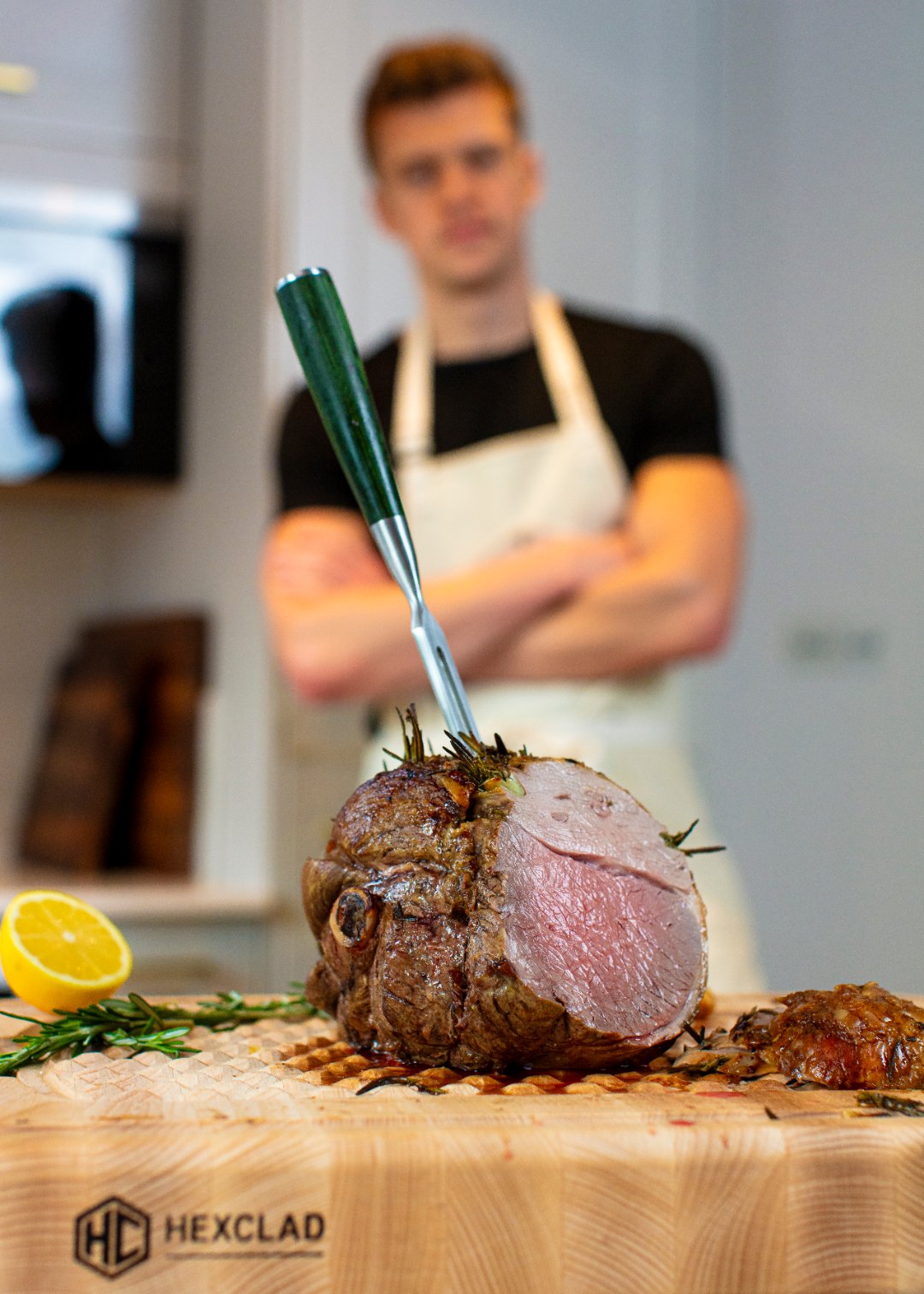

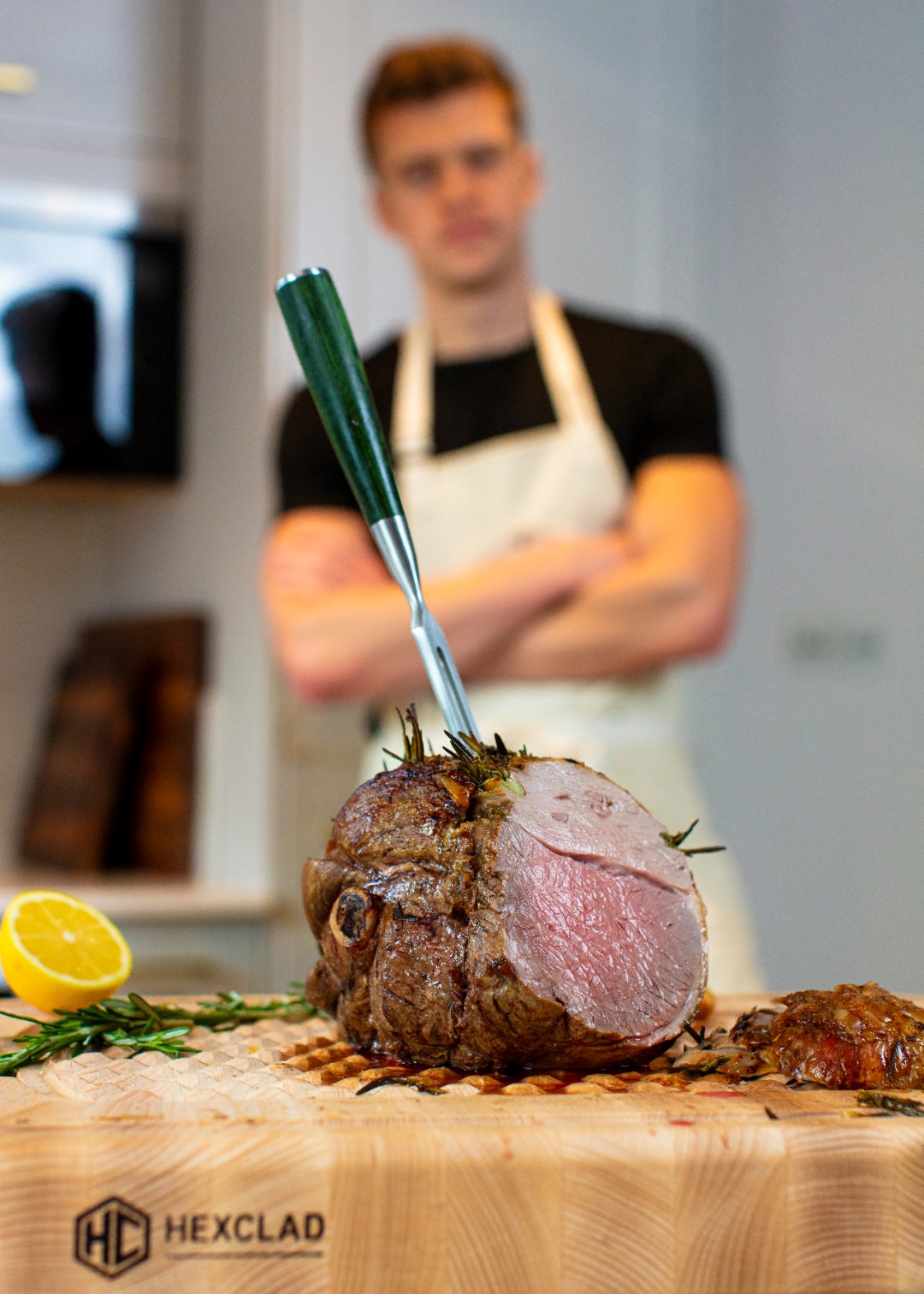
In-context product content 303 produced for HexClad and Cavari. Showing products in use, in real settings, gives consideration-stage ads something to work with beyond a product on white.
Stage 3: Conversion
Objective: purchase. By now the customer has seen your brand several times. The job is to remove friction and give a reason to act now.
- Dynamic catalogue retargeting showing the exact products they viewed
- Genuine urgency: limited stock or seasonal relevance, never invented scarcity
- Offers reserved for repeat visitors who haven't converted
- Email alongside paid: capture emails early and run a nurture sequence in parallel with retargeting
The three-stage structure at a glance
| Stage | Objective | Starting budget split | Lead platforms |
|---|---|---|---|
| Awareness | Reach, video views, saves | 20–30% | Pinterest, TikTok, Meta |
| Consideration | Landing page views, engagement | 40–50% | Pinterest, Meta |
| Conversion | Purchase | 30–40% | Meta retargeting |
Treat those splits as a starting point and shift budget towards whatever your measurement shows is working.
Fix Your Measurement Before You Judge the Results
This is the section most homeware brands skip, and it's why so many conclude paid social doesn't work.
The window problem
Meta's ad set attribution options are 1-day or 7-day click, plus 1-day view and engage-through. You can't set a 28-day click window for optimisation any more, though Meta still lets you view 28-day click conversions through Compare Attribution Settings. For a purchase that takes six weeks, Meta's own reporting will always miss part of the story, so you need to measure outside the platform as well.
The practical implication: if you've ever seen a low Meta ROAS on a high-ticket product and cut the budget, you may have cut something that was working once delayed sales were counted.
Four measurement fixes to make now
| Fix | How |
|---|---|
| Compare attribution windows | Use Compare Attribution Settings in Ads Manager to see how many conversions arrive after the 7-day window. On Pinterest, use the 30-day default or longer. |
| UTMs plus GA4 | Tag every paid social link and use GA4 path analysis to see how people move between channels before buying. |
| Post-purchase surveys | Ask "how did you first hear about us?" at checkout. It often reveals social's role in discovery that no click-based model captures. |
| 90-day cohort report | Group customers by the month of their first paid social click and track purchases over the next 90 days in Shopify or your BI tool. |
The cohort view catches delayed conversions that fall outside platform windows, and it shows the lifetime value of customers acquired through paid social, which for homeware brands with repeat purchase potential is often the strongest number in the business case.
Key takeaway: blended revenue against total spend, plus a 90-day cohort view, gives you a far truer picture than channel ROAS in a 7-day window.
What This Looks Like in Practice
Two 303 clients with considered, higher-ticket products show the full-funnel approach working:
- WaterRower | NOHrD (premium fitness equipment that sits in the home): awareness on Meta and Display aimed at a niche audience in key UK cities, remarketing to people who'd engaged, then dynamic product ads, alongside a segmented email programme. Meta revenue rose 264% year on year and email campaign conversion rate rose 24%.
- Phoenix Gravity (premium water filters): Search and Shopping to capture intent, short Reels on Meta to explain setup and proof, and sequenced retargeting answering real questions about capacity, maintenance and value. Spend scaled 139%, with £451k in new customer revenue and returning customer revenue up 573%.
Budget and Timelines
Paid social for a considered category needs more runway than most brands plan for. Two practical rules:
- Give the algorithm enough data. Meta needs a steady flow of conversion events to optimise. If high-ticket purchases are too rare, optimise for a closer, more frequent signal such as add to cart or initiate checkout while volume builds.
- Set expectations on a 90-day view. If the board expects positive ROAS in month one, a long-cycle category will disappoint. Agree up front that you'll judge performance on cohort and blended results over a quarter.
When to scale, when to pause
| Scale when | Pause and reassess when |
|---|---|
| Blended results are trending up over 90 days | 90 days in with no improvement in blended results |
| The cohort report shows delayed purchases arriving in weeks 4 to 8 | Paid social traffic barely converts on site, which usually points to a product page or landing page problem |
| Retargeting outperforms cold acquisition, a sign top-of-funnel seeding is working | Creative hasn't been refreshed in weeks and frequency is climbing |
Creative quality matters more than most brands assume in a category this visual. Products shown in real rooms give people something to imagine in their own home, which product-on-white images rarely do.
Frequently Asked Questions
Is Pinterest better than Instagram for homeware?
They do different jobs. Pinterest captures people actively planning, with longer attribution windows. Instagram brings scale, retargeting and catalogue ads. Most considered homeware brands need both.
What attribution window should a homeware brand use on Meta?
Meta's maximum ad set window is 7-day click. Keep it, compare against longer windows in reporting, and judge overall performance with GA4, post-purchase surveys and a 90-day cohort report.
How long before paid social shows results for furniture?
Retargeting can show results quickly. Prospecting for high-ticket pieces usually needs around a quarter before you can judge it fairly on cohort and blended data.
Should we run conversion campaigns on cold audiences?
For lower-priced decor, often yes. For high-ticket furniture, pair them with awareness and consideration campaigns so conversion campaigns have warm audiences to work with.
So, Is Paid Social Worth It?
Yes, if it's built around how homeware customers actually buy: across several platforms, over weeks, with creative that does a different job at each stage. It isn't worth it when it's run as a direct-response channel with impulse-purchase logic and a 7-day measurement window.
The brands that succeed aren't spending more. They're spending smarter: Pinterest seeding consideration, Meta retargeting warm audiences, measurement that reflects the real buying cycle, and creative that moves from inspiration to information to conversion.
If you're re-evaluating paid social for a homeware brand, start with measurement and creative mapping, then give the funnel a quarter to prove itself. 303's paid social team works with premium brands on exactly this, alongside email and content production. Get in touch to talk it through.