What Does "Organic Reach" Actually Mean for a Luxury Brand in 2027?
Organic reach for luxury brands now spans social, search and AI discovery. This guide explains what each channel means in 2027, why follower counts mislead, how to close the AI visibility gap, and which metrics and three-layer framework luxury brands should use instead.
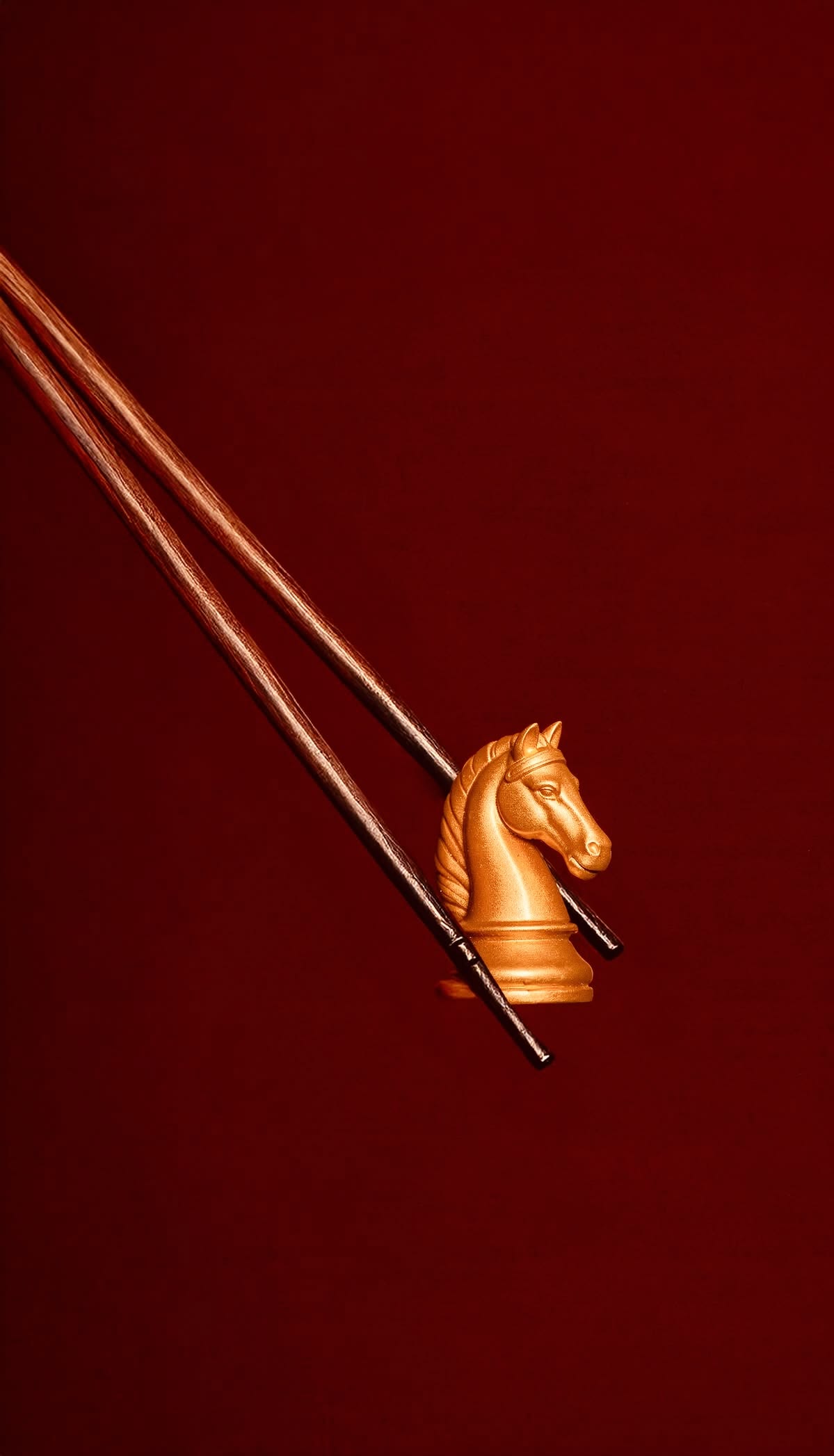
Hermès is famously restrained on social media. It doesn't chase trends or post at the pace of mass-market brands, yet it passed €16 billion in revenue in 2025, up 9% at constant exchange rates, with a recurring operating margin of around 41%. Jacquemus took the opposite route, building a huge social following through viral, playful content, and grew revenue from about €100 million in 2021 to around €280 million in 2023.
Two luxury brands. Two very different ideas of organic reach. Both, arguably, winning.
The uncomfortable truth for luxury marketers in 2027: "organic reach" no longer means one thing. It now spans at least three channels: social media, traditional search and AI-powered discovery. A brand can have tens of millions of Instagram followers and still be close to invisible in the AI answers that increasingly shape what affluent buyers research next.
Most coverage of organic reach stops at social engagement rates. That's the wrong place to stop. This article looks at what organic reach covers in 2027, where luxury brands underperform, and where the real opportunity is.
The Three Channels That Now Define Organic Reach
Ask a luxury marketing team about organic reach and they'll show you a social dashboard: followers, post reach, engagement rate. Those numbers are real, but they're only one part of the picture.
| Channel | What it is | Where luxury stands |
|---|---|---|
| Social | People who see your content without paid promotion | Big followings, modest engagement on Instagram; stronger on TikTok |
| Search | Unpaid visits from Google and other search engines | Strong for brand and product searches from high-intent buyers |
| AI discovery | Being cited or recommended in ChatGPT, Perplexity and Google's AI answers | Often weak, because AI draws on sources luxury brands rarely publish in |
1. Social organic reach
This is the channel most teams measure. Dash Social's luxury benchmarks for the first half of 2026 put average luxury engagement at 2.5% of views on Instagram and 4.2% on TikTok, with luxury TikTok posts averaging around 381,000 views against roughly 206,000 on Instagram.
That gap creates a tension. TikTok rewards frequency, accessibility and trends, all of which sit awkwardly with how exclusivity is traditionally protected. Instagram feels safer for luxury, but its organic distribution is harder to earn.
2. Search organic reach
Organic search still matters enormously for luxury, because luxury buyers search with high intent and high specificity: a model name, a price, a boutique, a comparison. They already know roughly what they want and are researching before they commit. Organic search catches them at the most valuable moment in the journey.
3. AI organic reach
This is the newest channel and the one most luxury brands are not accounting for. Google's AI Overviews, ChatGPT and Perplexity are now part of how people research purchases. In a Pew Research Center study, Google showed an AI summary on about 18% of searches, and users who saw one clicked a traditional result 8% of the time, against 15% when there was no summary.
The problem is where AI answers come from. Profound's analysis of around 680 million AI citations found Wikipedia made up 47.9% of ChatGPT's top ten cited sources, while Reddit made up 46.7% of Perplexity's and 21% of Google AI Overviews'. Luxury brands, which have historically preferred controlled editorial environments to the open web, are largely absent from these sources.
The core issue: A luxury brand with a huge following and a beautifully art-directed website can still be missing from an AI answer to "which luxury watch should I buy for a 40th birthday?" For much of the category, that's the current reality.
Why the Old Definition No Longer Works for Luxury
The traditional definition of organic reach, posts seen without paid promotion, assumed a simple path: publish, the algorithm distributes, the audience sees, some convert. For luxury, that model was always imperfect. Now it's actively misleading.
Social opens luxury sales; it rarely closes them
Social is where many luxury buyers first discover or reconnect with a brand, but the purchase usually happens somewhere else: in a boutique, through a client adviser, or days later on the brand's own site. Judging social organic reach on direct clicks and last-click sales misrepresents how luxury actually sells. The better question is whether the right people met the brand, in the right context, at all.
The follower-count problem
Many luxury brands have spent years building large, passive followings. A big follower number doesn't mean the brand is reaching those people today. Organic distribution on Instagram increasingly favours content people actively share, save and send to friends, so content that travels is what earns reach.
What the Hermès model actually tells us
Hermès is often cited as proof that luxury doesn't need social media. That misreads it. Hermès isn't absent from social; it's selective in a way that protects rarity, and it lets conversation about the brand build across platforms it doesn't control. The lesson isn't "post less". It's that organic reach for luxury is most powerful when it's earned through cultural presence rather than content volume.
The AI Visibility Gap: Luxury's Biggest Organic Reach Problem
Of all the organic reach challenges facing luxury brands, the AI visibility gap is the most urgent and the least addressed.
Why luxury brands are at a disadvantage in AI search
AI engines lean heavily on the open web: encyclopaedic sources, forums, editorial reviews, comparison guides and well-structured brand content. Controlled scarcity works brilliantly for brand perception in traditional media, but it can translate into near-total absence in AI-led discovery. A heritage watchmaker with a century of craft and a beautiful website may barely exist in the material AI engines use to answer "what's the best luxury watch for a first serious purchase?"
Meanwhile, brands that publish clear guides, comparisons and expert explanations get cited instead. That isn't a content quality problem. It's a content architecture problem.
What AI-friendly luxury content looks like
- Clear explanations that answer the questions buyers actually ask
- Comparison tables and structured information AI engines can extract cleanly
- Sourced facts and expert analysis that build editorial credibility
- Transparent product information, including materials, provenance and care
None of this means abandoning luxury codes. A considered editorial piece on what separates hand-stitched leather from machine-finished, with clear headings and specific detail, serves search and AI visibility at the same time, and reads as exactly the kind of authority luxury should project.
The shift required: Luxury brands need content that works in open, extractable information ecosystems as well as in controlled editorial environments. The two aren't mutually exclusive, but they need a different content architecture.
AI citation patterns also tend to reinforce themselves: sources cited often come to be treated as authoritative, which earns them more citations. Brands that stay absent in 2027 aren't just missing a channel; they're ceding the discovery layer to competitors who publish more openly.
The Underrated Channels Where Luxury Organic Reach Works
While the industry debates Instagram engagement and whether TikTok suits luxury, three channels are quietly doing more work than most brands give them credit for.
Pinterest: built for considered purchases
Pinterest reported a record 640 million monthly active users in Q2 2026. People come to it to plan and collect ideas rather than to pass time, which suits categories with long consideration cycles: watches, fine jewellery, interiors and bespoke tailoring. Pins can also keep surfacing in search for months, far longer than a typical feed post, so well-produced visual content keeps compounding.
YouTube: long-form for luxury storytelling
YouTube is where luxury's natural strengths, craft, depth and narrative, translate most directly into organic reach. A 12-minute film on the making of a single piece isn't viable on Instagram. On YouTube, it builds the sustained understanding that drives high-value decisions, and videos keep being found through search long after they're published.
Email: the organic channel nobody calls organic
Email is rarely part of organic reach conversations, but it should be. For luxury brands, a curated, infrequent list is the most direct owned channel available. A weekly broadcast wears away exclusivity; a quarterly editorial dispatch that feels like a private invitation reinforces it.
| Platform | Main luxury role | Content shelf life | Best for |
|---|---|---|---|
| Brand perception | Short | Visual identity and culture | |
| TikTok | Discovery | Short | Reaching the next generation of buyers |
| Planning and aspiration | Long | Considered purchases and inspiration | |
| YouTube | Deep storytelling | Long | Craft, heritage and product depth |
| Relationship | Owned | Loyal clients and private access |
Organic Reach in Practice: Rapport London
For Rapport London, the luxury watch winder and accessories maker, 303 built creative around craftsmanship and lifestyle rather than product shots alone. After launching Rapport's TikTok and YouTube channels in 2022, the brand gained 20,000 followers and more than 200,000 views, alongside strong commercial growth across its markets.

From 303's Christmas content shoot for Rapport London, the luxury watch winder maker.
It shows what organic reach looks like for a heritage brand when it's done well: content made for each platform, rooted in craft, building an audience that cares about the product. Read the Rapport London case study.
What Luxury Brands Should Actually Measure
Follower count, post reach and engagement rate aren't wrong. They're incomplete. Here's how to rebalance your reporting:
| Instead of only… | Also track… | Why it matters |
|---|---|---|
| Follower count | Share of voice in quality editorial and conversation | Shows whether the brand is part of the conversations its buyers follow |
| Total post reach | Shares, saves and sends | These signals drive organic distribution today |
| Engagement rate alone | Audience fit against your customer base | A mismatch means you're building reach with the wrong people |
| Paid mentions | Unprompted organic mentions and their sentiment | Earned conversation is a stronger signal of brand heat |
| Search rankings only | AI citation frequency for high-intent questions | Shows whether you appear in AI answers buyers rely on |
The content architecture principle
Across social, search and AI, the brands that outperform share one trait: intentional content architecture. Not volume. Not posting frequency. Content designed for the channel it will live on, rather than one asset cut down and spread everywhere.
That means a harder conversation about resources. Fewer, better, channel-specific pieces cost more in the short term and work harder in the long term. It also means resisting pressure to match mass-market posting cadences, which is unnecessary and often counterproductive for luxury.
On budget split: Les Binet and Peter Field's work for the IPA suggests that, on average, around 60% brand building and 40% sales activation drives the strongest long-term results. Many luxury brands now skew heavily to performance, which can make short-term ROAS look healthy while long-term brand equity quietly erodes.
A Practical Framework: Three Layers of Organic Reach
Organic reach in 2027 is best understood as three layers, each with its own job, content and measures.
Layer 1: Social organic reach (discovery and perception)
- Prioritise shares and saves over likes as the main distribution signal
- Make platform-specific content rather than cross-posting the same assets everywhere
- Treat TikTok as a discovery channel for future buyers, not a direct conversion tool
- Make Pinterest a primary investment, not an afterthought
Layer 2: Search and AI organic reach (research and consideration)
- Audit AI visibility now: test brand and category questions in ChatGPT, Perplexity and Google
- Make sure your Wikipedia presence is accurate, and treat it as brand infrastructure
- Publish editorial content that answers buyers' real questions, structured so AI can extract it
- Find the forums and Reddit threads where your category is discussed, and understand what's being said
Layer 3: Owned organic reach (retention and relationship)
- Treat email as a membership channel, not a broadcast channel
- Invest in long-form editorial and film, from craft documentaries to interviews
- Create content that makes your audience feel they've been granted access others don't get
Frequently Asked Questions
What is organic reach for a luxury brand?
It's every way a potential customer encounters the brand without paid promotion: social posts, search results, AI answers, editorial coverage, forums and owned channels like email. It's a brand presence measure, not just a social metric.
Is Instagram still worth it for luxury brands?
Yes, for brand perception and culture, but follower counts overstate real reach. Focus on content people share and save, and judge it by audience quality rather than raw numbers.
How can a luxury brand appear in AI answers like ChatGPT?
Publish clear, well-structured content that answers buyers' questions, keep sources like Wikipedia accurate, earn coverage in respected editorial, and track which prompts you appear in over time.
Should luxury brands be on TikTok?
For most, yes, as a discovery channel for the next generation of buyers, with content that protects the brand's codes rather than chasing every trend.
The Single Most Important Shift
If luxury marketing teams make one change in 2027, it should be this: stop treating organic reach as a social media metric and start treating it as a brand presence metric.
Organic reach is a Reddit thread about the best watches under £10,000. A Google AI answer to "which luxury handbag holds its value best?". A Pinterest board curated by someone planning their next significant purchase. A YouTube film watched by someone who won't buy for three years but will remember the brand when they do.
The brands that build for all of these will have stronger brand equity, more resilient client relationships and an advantage in the discovery channels that matter most in the decade ahead. If you'd like help building that, 303 runs organic social, YouTube and email for premium and luxury brands. Get in touch.